What if your students could acquire Spanish naturally—without memorizing endless vocab lists?
It sounds too good to be true, right profe? But with Acquisition-Driven Instruction (ADI), students can develop language proficiency by engaging with meaningful and comprehensible input. One of the most powerful ways to provide that input is through reading. Today we’ll explore how ADI works, why reading is essential, and how you can incorporate reading activities into your Spanish classroom.
Why Reading is Key in ADI
Reading provides rich, repeated exposure to vocabulary and grammar in context, which helps students absorb patterns naturally.
How the brain acquires language through input:
Vocabulary acquisition: Seeing words repeatedly in context helps students internalize meaning.
Grammar absorption: Instead of memorizing rules, students unconsciously pick up grammatical structures.
Fluency development: The more students read, the more automatic language processing becomes.
But not just any reading will do — texts must be comprehensible and compelling to keep students engaged and ensure effective learning.
Types of Reading Activities for ADI
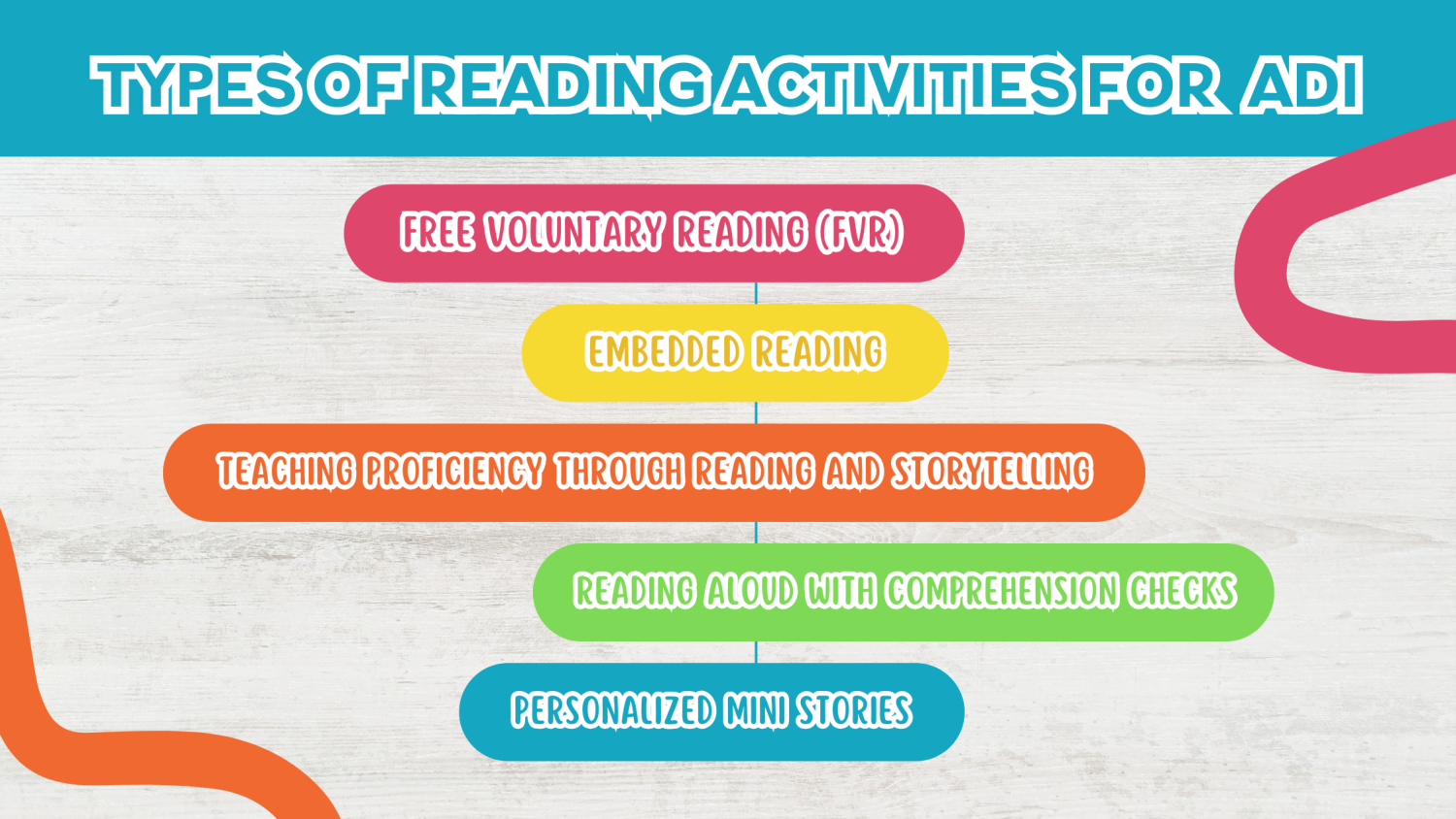
Want to make reading a core part of your instruction? Here are five effective ADI reading strategies:
1. Free Voluntary Reading (FVR)
Students choose books at their level and read for enjoyment. No tests, no pressure—just exposure to the language through engaging stories. If you want to get started with FVR, check out my friend Profe Zulita’s post with tips & tricks for FVR time.
2. Embedded Reading
Start with a simple version of a text, then gradually add details and complexity as students build understanding. I love to do this in my classes, and we add details to our story as the week goes on.
3. TPRS (Teaching Proficiency through Reading and Storytelling)
Use interactive storytelling with repetitive structures and student participation to reinforce comprehension.
4. Reading Aloud with Comprehension Checks
Read to students and pause to check understanding with questions, gestures, or quick summaries. I remember reading aloud with my Latin American poetry study group in college – it makes such a difference to hear the words aloud and read them on the page, at all levels.
5. Personalized Mini Stories
Write short, student-centered stories based on their interests to make reading more engaging and relevant. I also love to borrow students’ stories from earlier in the unit, add details, and bring them back with more detail later in a unit. Their faces light up when they realize we’re reading their story.
How to Choose the Right Texts
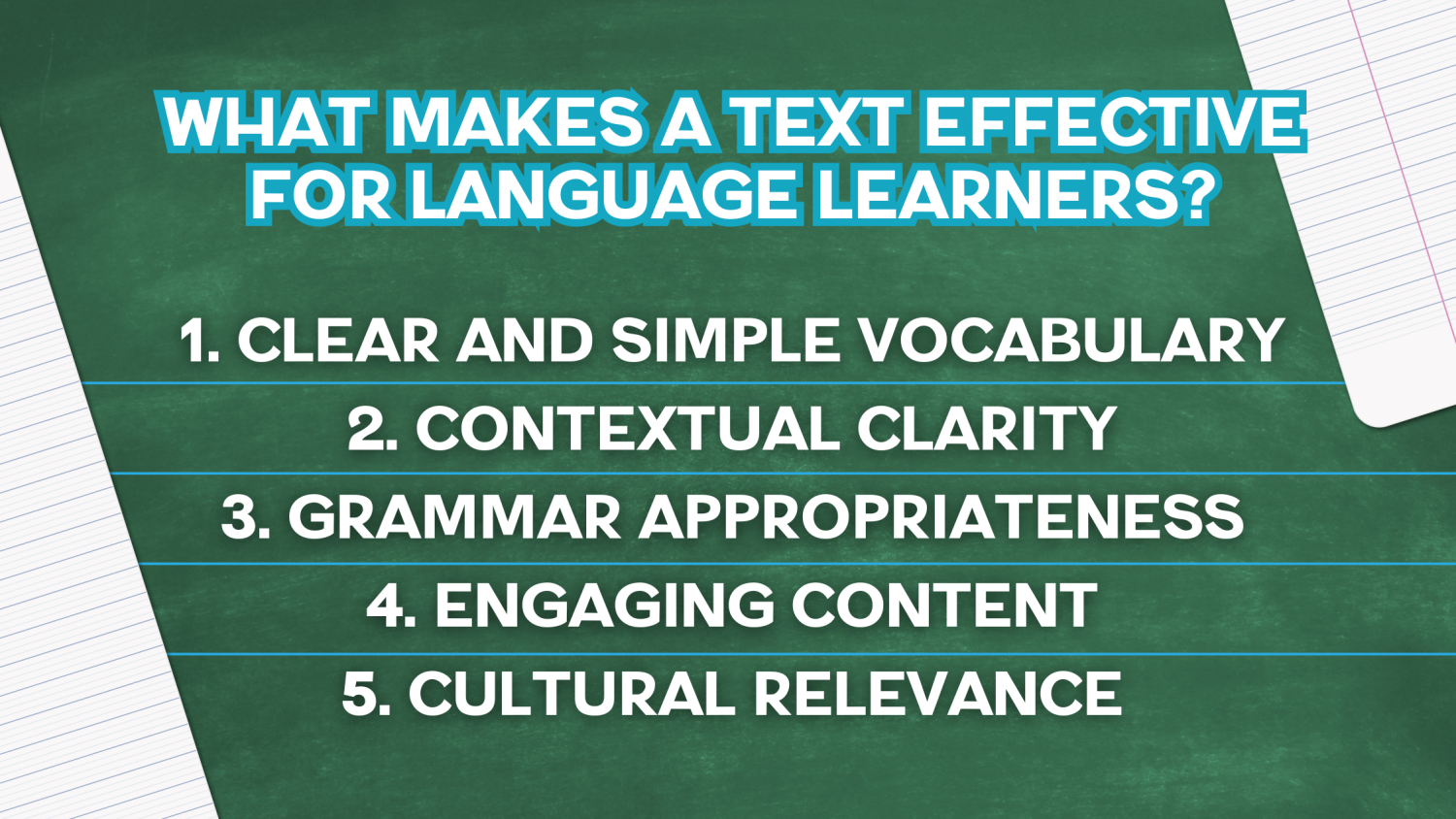
To be effective, reading materials should be:
✅ Comprehensible – Students should understand at least 90% of the text. For me, this means using text with lots of cognates and familiar words that my students recognize.
✅ Compelling – The content should be interesting and engaging. Kids want to talk about what they like! That doesn’t mean everything should be focused only on their hobbies and interests, but it can mean adding news articles or stories related to their interests and what’s going on in their worlds.
✅ Culturally Relevant – Stories should connect to students’ backgrounds and experiences. I love choosing (or creating) stories that take place in our city, about communities like our school community, with events similar to what my students might experience on a regular basis. This also gives them a solid foundation to make comparisons and connections when we look at cultural practices in the Spanish-speaking world.
Examples of Great Texts:
Novels for language learners (there are so many out there to choose from!)
Student-generated stories (stories created as a class or by individual students)
Practical Strategies for Implementing Reading in ADI
Before Reading:
Preview key vocabulary.
Set the context with images or discussions.
During Reading:
Use circling questions (e.g., “Did Juan go to the store or the park?”)
Act out scenes to reinforce meaning. I also love to encourage students to draw the story, especially if it’s a shy group that doesn’t want to act out the story.
Summarize sections in L1 (if necessary) to ensure comprehension.
After Reading:
Discuss the story in Spanish.
Have students write a parallel story using similar structures.
Let students draw summaries to reinforce understanding visually.
Final Tips & Takeaways
✔ Encourage reading for pleasure—it’s one of the best ways to acquire language.
✔ Don’t force output—let speaking and writing emerge naturally.
✔ Provide lots of comprehensible input—students need massive exposure to the language.
✔ Offer variety—fiction, non-fiction, cultural stories all have value.
Try It in Your Classroom!
Choose one reading strategy from this post and try it in your next class. Watch how engaged your students become—and how much their Spanish improves!
I’m Kathryn Kosmider. I help teachers make language acquisition fun, accessible, and stress-free with activities, curriculum, and trainings. I live with my dog in sunny Spain. I’m so excited to work with you!