
Have you ever been right in the middle of a story with your students… their eyes wide, totally engaged… only to stop the momentum with a grammar explanation?
We’ve all been there. And let’s be honest: it’s an instant energy killer.
The good news? Grammar doesn’t have to derail your lesson. In fact, it doesn’t have to feel like charts, drills, and worksheets at all. Instead, you can use pop-up grammar, those quick, in-the-moment explanations that keep students immersed while still helping them notice important language structures.
Think of it like a speed bump, not a roadblock: just enough to slow down for a second, then keep going.

What Is Pop-Up Grammar?
Pop-up grammar is a brief explanation or correction, 5 to 15 seconds, that happens naturally in the middle of a story, conversation, or reading activity. The goal is to:
- Draw students’ attention to a structure.
- Connect it to meaning.
- Jump right back into the fun part of the lesson.
Research tells us that grammar is best acquired in context, not in isolation. Pop-up grammar allows you to give that support without stopping instruction or draining the energy from your classroom.
But… if you’re looking for a grammar resource worksheet that actually does include context, I’ve got a freebie for you. Grab it here and use it for review or reinforcement after your in-class pop-ups.
How to Use Pop-Up Grammar in Class
Here are a few ways to make it work:
1. Ask Noticing Questions
Instead of teaching an explicit grammar rule in your Spanish class, ask:
“What do we notice about all the action words here?”
Students might respond, “They all end in -a.” You can quickly connect it: “Yes! That’s what we use when someone else is doing the action.” And then, you’re right back into the story.
2. Recast Quickly
If a student says “él hablo” instead of “él habla,” simply recast: “Ah, él habla.” It’s a fast correction that models the right form without breaking the flow. See more on error correction here.
3. Keep It Short
Set yourself a mental rule, profe: explanations under 10 seconds. Long enough for clarity, short enough to stay in the story.
4. Use Visuals and Anchors
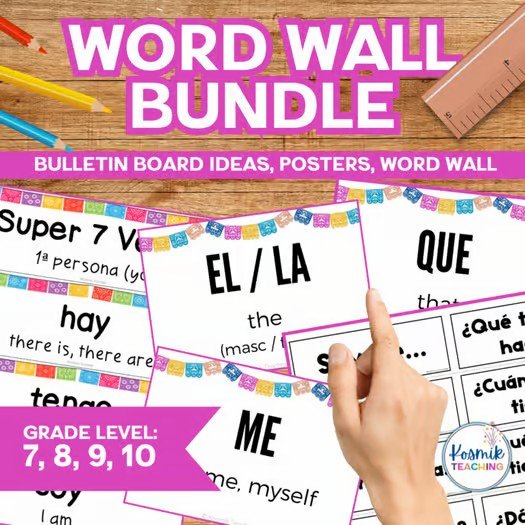
- Point to anchor charts on the wall. (Click here to grab mine for Super 7 and Sweet 16 verbs!)
- Use gestures or even finger signals for verb endings.
- If you’re fancy, grab that laser pointer to highlight verbs from across the room.
All of these Spanish grammar reference points allow you to show your students the patterns without diving into a full grammar lecture.
Why It Works
When grammar pops up naturally in context, students see how language is actually used, not how it looks on a worksheet. They get the structure, the meaning, and the application all at once.
Final Thoughts
Grammar doesn’t need to feel like a detour. It’s simply part of the journey, profe, and pop-up grammar lets us weave it seamlessly into the story, the conversation, and the interaction with students.
So, next time you’re mid-storytelling or chatting with your class, try a pop-up instead of a full stop.
And I’d love to hear from you! How do you teach grammar without breaking immersion? Drop a comment below.
Don’t forget to grab your free grammar-in-context resource! Here’s the link again.


