

Celebrate Women’s History Month: 7 Ideas for your Spanish Classroom
¡Hola, profe! As March kicks off, we can’t help but get excited about Women’s History Month! During this month, we take the time to reflect on the countless contributions and achievements of women throughout history. As educators, we have a unique opportunity to celebrate Women’s History Month in our classrooms and incorporate it into our Spanish classes. It’s important to highlight the significant role Hispanic women have played in shaping and influencing our world as we know it today. So, let’s explore how we can make our Spanish classes more inclusive and engaging by celebrating Women’s History Month together.
Let’s dive into the fun activities and strategies for celebrating Women’s History Month in Spanish class.

Need a plan, profe? Click this image for my best-selling reading bundle for March!
Why Teach Women’s History Month in Spanish Class?
As Spanish teachers, we have the unique opportunity to promote diversity and inclusivity in our classrooms. By incorporating women’s history, we can teach our students about the valuable contributions women have made throughout history.
Women’s History Month offers an excellent opportunity to inspire our students with role models and stories of remarkable women. When students see the impact women have made in various fields, they can dream big and realize that anything is possible with hard work and determination.
By empowering our students to challenge gender stereotypes, we can create a more inclusive and supportive community. We can encourage our male students to be allies for gender equality, too.
Celebrating Women’s History Month offers an excellent way to enhance our students’ cultural understanding and appreciation. We can highlight the contributions of Latin American and Spanish women, and showcase their unique cultures and traditions.
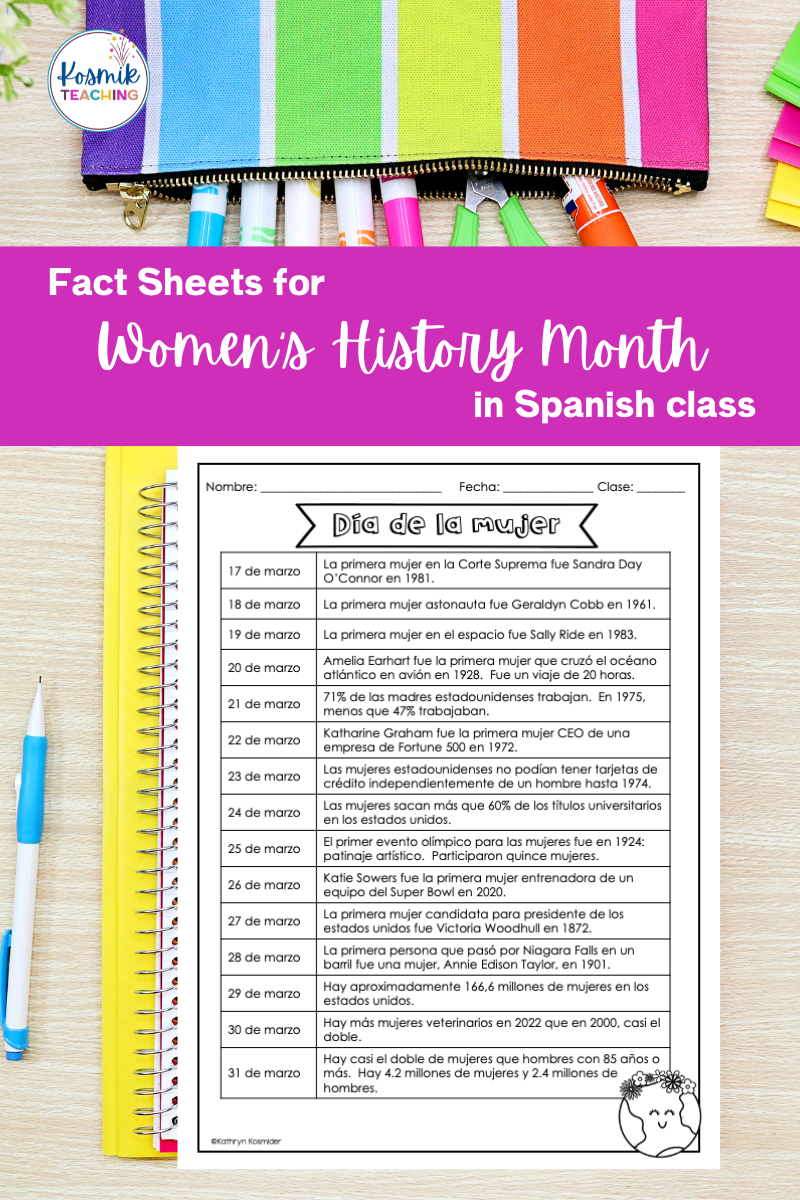
Want to grab this fact sheet? Click here!
Fun and Engaging Activities for Women’s History Month
Daily Fun Facts:
Start each class with a fun fact about a woman who has made a significant impact in history or pop culture. Ask your students if they knew about her already and ask follow-up questions about her work and impact.
Grab a Women’s History Month Fact Sheet here.
International Women’s Day
Celebrate March 8th with a lesson about why this day is significant and how it’s celebrated around the world. You can discuss the gender gap and the need for gender equality, and encourage your students to create empowering posters or artwork.
Need an accessible reading for International Women’s Day? Click here.

Looking for a digital resource? Check out this Celia Cruz reading.
Famous Latin American and Spanish Women
Another option, profe, is for students to research and present on the achievements of prominent women from Latin America and Spain.
Empower your students to research and present on a woman who inspires them. You can give some direction with specific topics or criteria, such as a local hero or artist.
They can share their accomplishments in various fields, like art, science, politics, or literature, and encourage your students to take inspiration from their stories.
Authentic Materials
Incorporate news articles, podcasts, and videos about women’s contributions in different fields. It can help students see the impact of women in real-life situations and can make the lesson more relatable and memorable.
Class Display
Create a visually appealing class display dedicated to famous women. It can consist of artwork, photos, or notable quotes. This will allow students to learn passively and constantly be reminded that women have played a significant role in society.
Choice Board Project
Engage your students by offering various project options where they can demonstrate their understanding of Women’s History Month. Click here to check out my Women’s History Month Choice Board Project.

¿Ha sido útil, profe? Pin this post for later!
By teaching Women’s History Month in Spanish class, we can promote inclusivity and teach our students to be accepting of diversity. We can use the stories of remarkable women to inspire and empower our students, and to challenge gender stereotypes.
By incorporating fun and engaging activities and strategies, we can make sure that our students appreciate the impact women have made in different fields and cultures. Remember, we’re here to help every step of the way, making learning accessible for all students.


