
Does it ever feel like you fly through a unit… only for your students to forget everything the moment it’s over?
I get it, profe. That used to happen to me all the time. We’d finish a project, assess, wrap things up… and then immediately jump into the next unit. No pause. No processing. Just on to the next thing.
Now, I don’t do that anymore.
Instead, I build in a reflection week after every unit, and it has completely changed the tone, pace, and effectiveness of my Spanish classroom.
What Is Reflection Week?
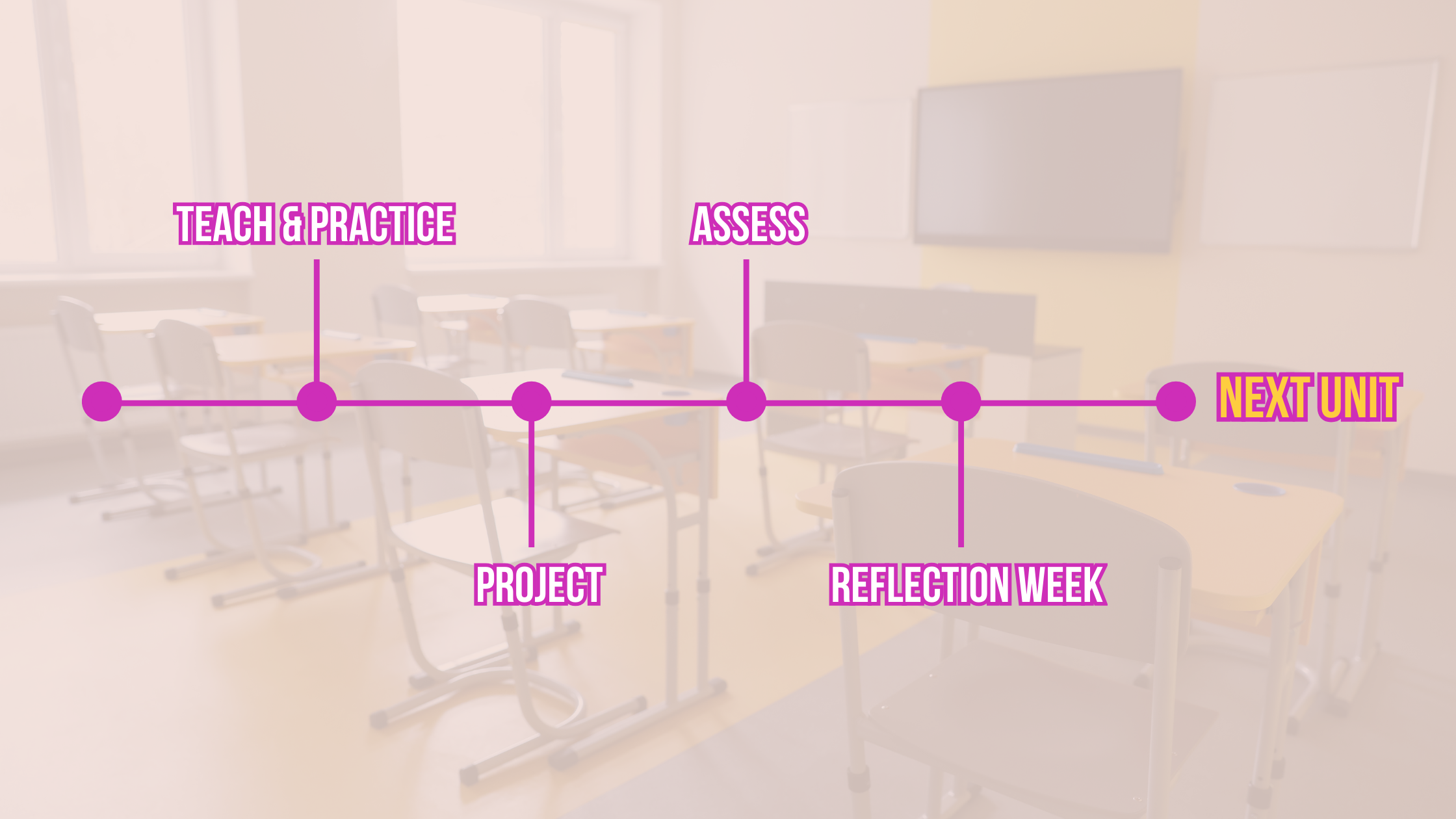
After about four or five weeks in a unit, where we’ve explored new material, practiced skills, completed projects, and assessed learning… we stop.
We pause.
We review.
We reflect.
And we reset.
I call it reflection week, but really it’s a built-in moment to slow down, look at growth, and set goals before starting something new.
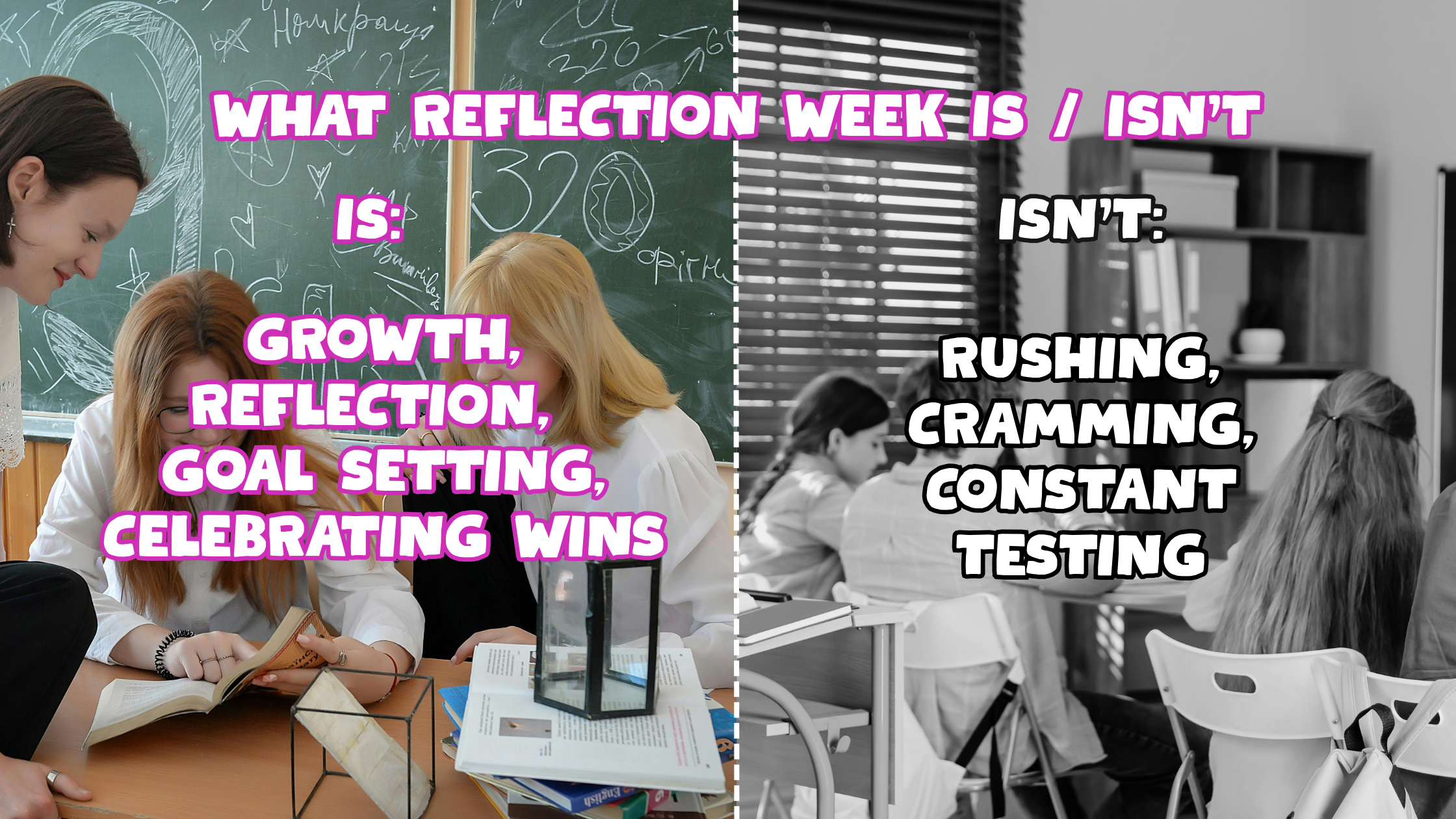
This week is not about grades, although it does give students a chance to improve them, and it helps me catch up on grading (more on that in another video). At its core, reflection week is about growth.
What Reflection Week Looks Like in My Classroom
1. Review & Celebrate
The first couple of days are all about review… but not the boring kind.
We play games, talk about what students remember most from the unit, and reflect on what they actually enjoyed. Just as important, we celebrate wins. Students get to share things they’re proud of, and that matters more than you might think.
2. Guided Reflection (With Honesty)
Students complete a reflection activity that walks them through:
- Their current grade and what it reflects about effort and learning
- Recent feedback I’ve given them (and actually reading it)
- Patterns they notice in that feedback
They also reflect on:
- What feels easy
- What they feel confident about
- Where they know they could improve
With this activity, there are no wrong answers here, just awareness. I emphasize honesty because reflection only works if students are real with themselves.
3. Goal Setting That Actually Means Something
Once students reflect, they set one specific goal for the next unit.
That goal might be:
- A skill (using more vocabulary, improving writing, speaking with confidence)
- A habit (turning in homework, studying consistently)
- A mindset shift (participating more, taking risks, staying positive)
The key is that the goal is personal and meaningful to them.
If you want to take it further, this is a great opportunity to create a goal wall where students can share goals and get inspiration from each other.
4. One-on-One Check-Ins (Yes, They’re Worth It)
While students are working on goals, making up work, or getting ahead, I check in with them individually.
Is it time-consuming? Yes.
Is it worth it? Absolutely.
During these mini conferences, I help students clarify what their goal actually looks like in practice. For example, if a student says, “I want to turn in my homework every week,” I ask:
“If I look at your planner or your assignments, what am I actually seeing?”
That question pushes them to think strategically about the steps they need to take—not just the outcome they want.
5. Wrap-Up Opportunities
Reflection week is also when students can:
- Finish missing assignments
- Revise reflections
- Complete an optional capstone or extra credit assignment
My capstone option lets students creatively show off something they learned—or explore something we didn’t have time to dig into during the unit.
Why Reflection Week Matters
This one week has completely shifted my classroom.
Instead of racing to the finish line and immediately jumping into the next unit, we pause and process. The room feels calmer. Students feel more confident. And they actually recognize their own growth, especially when they compare where they started to where they ended.
It’s a reminder for them (and for us) that progress is better than perfection.
Want to Make This Easy?
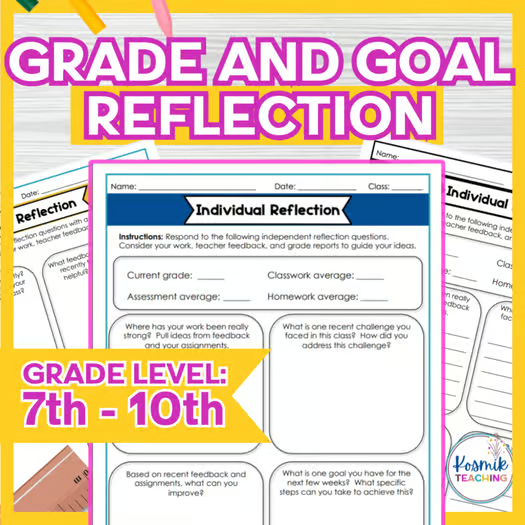
I’ve created a ready-to-use reflection and goal-setting resource that guides students through:
- Reviewing grades
- Reflecting on feedback
- Setting realistic, meaningful goals
It works digitally or on paper, with any level or theme, and it’s reusable all year long. Honestly, it makes reflection week feel way less overwhelming.
If your class feels like it’s moving too fast, try building in a reflection week.
Your students – and your future self – will thank you.
Let me know in the comments: How do you help your students reset and reflect after a unit?


