A 90-minute class period can feel like an eternity for both students and teachers if it’s not well-structured. Without a solid plan, students may lose focus, and the time can drag on. However, when designed effectively, a 90-minute block can fly by—filled with comprehensible input, meaningful practice, and engaging activities that support language acquisition. The key is to strike a balance: maximizing student engagement while keeping lesson planning manageable for the teacher.
Why Structure Matters in a 90-Minute Block
A well-planned 90-minute period allows for deeper language practice, but without proper pacing, students can lose focus. The key is to balance input (listening and reading) with meaningful output (speaking and writing), while incorporating movement and variety to maintain engagement. Here are three effective ways to break up your class time to create engaging Spanish lesson plans while minimizing prep work:
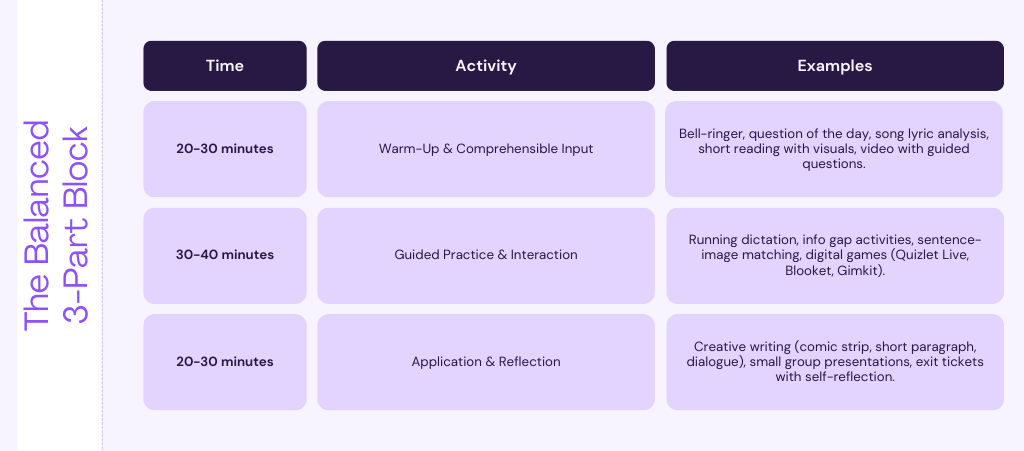
1. The Balanced 3-Part Block (Low-Prep, High-Engagement)
This structure ensures a mix of comprehensible input, interactive practice, and meaningful application. It works best for teachers who want bigger, general blocks of time that allow for flexibility within the time chunk, while still providing a clear structure for student-centered Spanish lessons..
Why it works: This plan balances teacher-led instruction, group work, and independent tasks to keep students engaged in high school and middle school Spainsh classes.
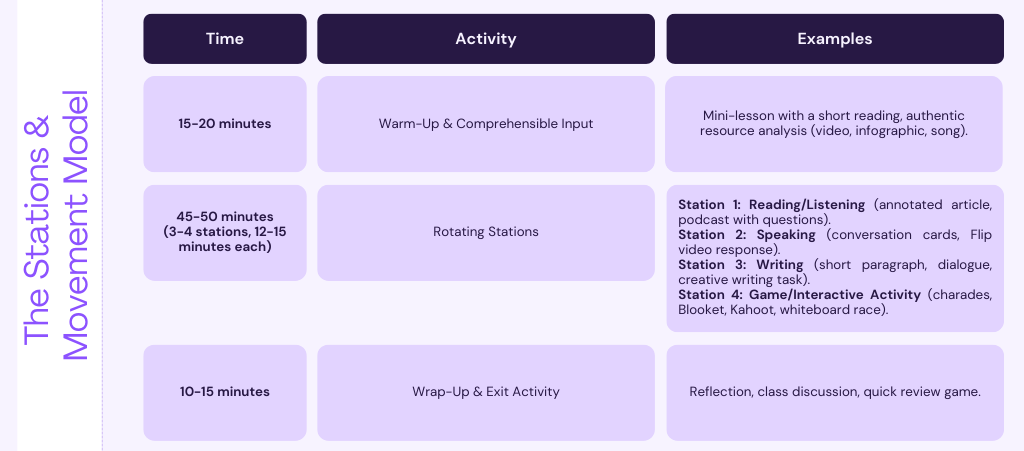
2. The Stations & Movement Model (Great for Differentiation)
This approach allows students to move and interact in various ways while reinforcing key concepts. This structure works best for teachers who have a variety of Spanish class activities ready for station work and who might want to sit at one particular station to offer support and guidance for a particularly tricky task (or to encourage speaking practice or conduct a speaking assessment).
Why it works: Stations provide structured practice while keeping energy levels high and allowing differentiation in Spanish class for diverse learners.
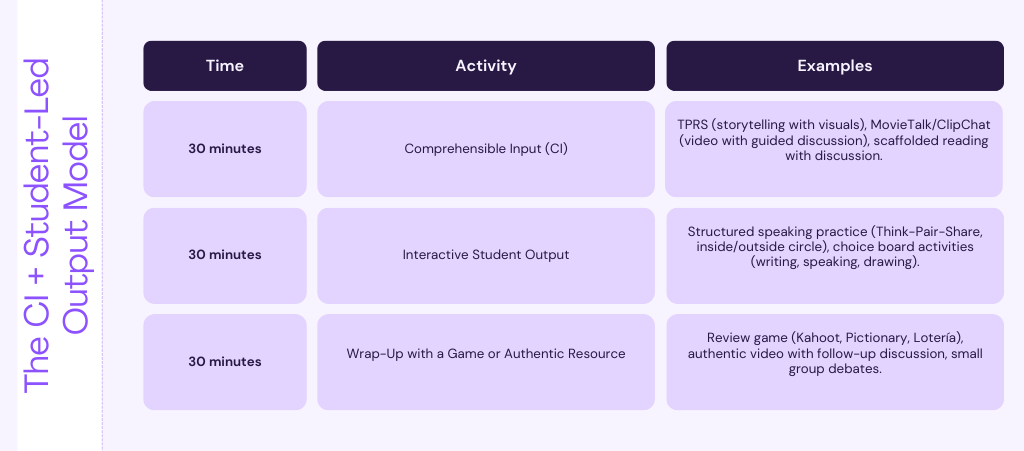
If you’re looking for an easy-to-plan day that still keeps students engaged, this structure relies heavily on comprehensible input (CI) and student-driven output. This plan is great for lower-energy days, as there’s a lot of interaction between students, and it places the “heavy lifting” on students rather than the teacher.
Why it works: This method prioritizes comprehensible input first, then allows students to process and produce language in a way that fits their learning style. It’s an ideal structure for engaging students in Spanish class with minimal teacher prep.
Final Thoughts
By incorporating these structured lesson plans, you’ll ensure that your Spanish class remains engaging, effective, and manageable. Whether you prefer a balanced mix, station-based learning, or comprehensible input-focused lessons, these strategies will help your students stay motivated and learning—without overwhelming you with prep work.
Looking for ready-to-use resources that align with these structures? Check out my TPT store for scaffolded Spanish activities designed for middle and high school classrooms!
Which of these lesson structures works best for your classroom? Let me know in the comments!
I’m Kathryn Kosmider. I help teachers make language acquisition fun, accessible, and stress-free with activities, curriculum, and trainings. I live with my dog in sunny Spain. I’m so excited to work with you!